

Too Much of a Good Thing: Why Overfilling Your Fluids Can Wreck Your Ride
Running low on fluids is bad — but overfilling can be just as ugly. Think of it like Thanksgiving dinner: a little extra is fine, but pile it too high and something’s gonna burst. Here’s what really happens when the funnel gets a little too enthusiastic.
1) Engine Oil — Foamy Disaster
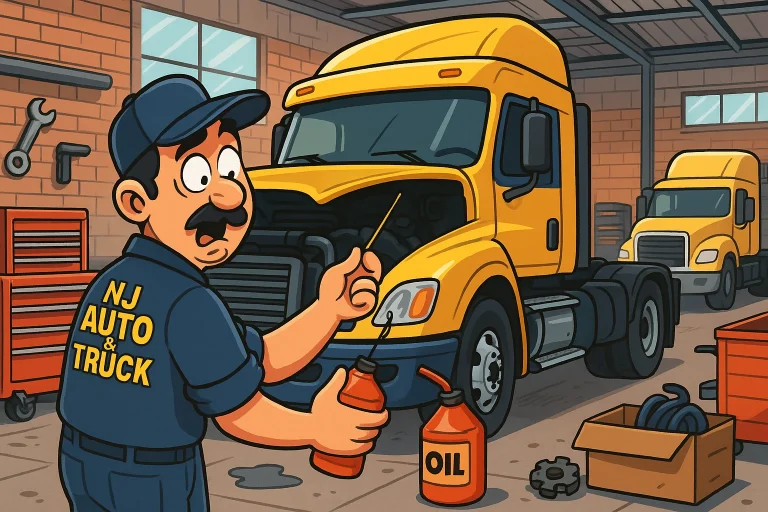
Too much oil lets the crankshaft whip it into foam. Foamy oil loses pressure and can’t lubricate bearings, cam lobes, and lifters correctly. End result: leaks, cooked seals, and premature wear.
- Symptoms: Oil leaks, burning smell, noisy valvetrain, high/erratic oil level on dipstick.
- Damage risk: Bearing wear, catalytic converter contamination if oil gets burned.
2) Automatic Transmission Fluid — Slipping & Spitting
Overfilled ATF aerates and loses hydraulic pressure. That means slipping shifts, overheating, and fluid pushed past seals.
- Symptoms: Slipping shifts, delayed engagement, fluid on the case or driveway, overheating.
- Damage risk: Burned clutches and a rebuild bill that ruins your weekend.
3) Coolant — Not a Fill-to-the-Brim Game
Coolant needs expansion space. If you overfill, the system purges the excess through the overflow and can pull in air pockets as it cools.
- Symptoms: Puddles under car, sweet smell, temp gauge swings, poor heater output.
- Damage risk: Hot spots, warped heads, blown gasket in extreme cases.
4) Power Steering Fluid — Pressure Problems
Small reservoir, big mess. Overfilling can cause aeration, whining pumps, and leaks at seals and caps.
- Symptoms: Whine when turning, foamy fluid, seepage around cap.
- Damage risk: Pump wear and steering assist issues.
What To Do If You Overfilled
- Don’t drive hard. Avoid high RPM and long trips until corrected.
- Measure correctly. Park level, check cold (or as specified), and read the dipstick/reservoir marks.
- Remove excess. Use a fluid extractor from the dipstick/reservoir or drain a small amount, then recheck.
- Inspect for foam/leaks. If fluid is aerated or you see fresh leaks, get it evaluated.
How To Avoid It
- Use the owner’s manual/specs and measure what you drain before refilling.
- Pour in most of the spec, then top off slowly while checking.
- For transmissions, follow the exact temperature/procedure — guessing is expensive.
Not sure where your level should be? Swing by New Jersey Auto & Truck in Paterson, NJ — we’ll set it right and check for leaks while you’re here.
FAQ
How much is “too much” oil?
Anything above the “MAX” on the dipstick is too much. Even 0.5–1 quart over can cause aeration on some engines.
Can I drive with overfilled oil or ATF?
Short, gentle trips might not kill it, but it’s risky. Correct the level ASAP to avoid damage.
Why does my coolant keep “losing” fluid after I filled it?
You likely overfilled it. The system purged the excess; once it settles at the correct mark, stop topping it off.
Serving Paterson & North Jersey fleets and drivers. Need help today? Call 973-247-1000 or book online.